What College Teaches About Failing
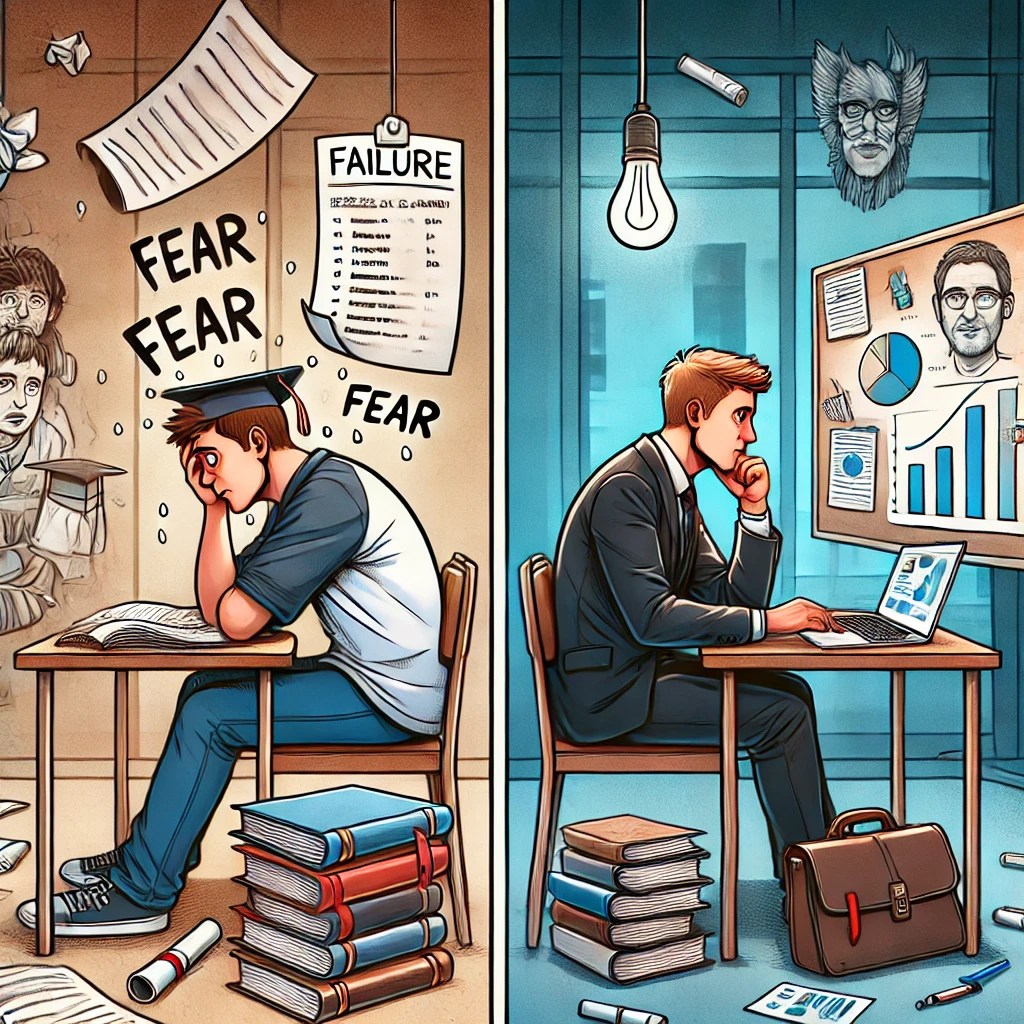
Failure is an inevitable part of life, yet the way we experience it in school versus in the real world couldn’t be more different. College conditions students to avoid failure at all costs—missed deadlines, bad grades, and failed exams can feel like catastrophic setbacks. But in the real world, failure is often a necessary ingredient for success. The problem? School rarely prepares us for this reality.
How College Conditions Us to Fear Failure
- A Grade-Driven Mindset
In school, success is measured in grades. A low grade isn’t just a number—it can affect scholarships, internships, and career opportunities. This creates a fear-driven approach where avoiding failure becomes more important than taking risks or learning from mistakes. - One-Size-Fits-All Learning
In college, there’s usually one correct answer and one way to get there. Creativity and experimentation often take a backseat to memorization and regurgitation. In contrast, real-world success often requires unconventional thinking and a willingness to test and iterate ideas. - Punishment Over Progress
Mistakes in school are penalized—points deducted, lower GPAs, academic probation. But in the real world, mistakes can lead to insights, innovation, and breakthroughs. When failure is punished rather than used as a learning tool, students develop an unhealthy relationship with risk-taking. - College Builds Good Employees, Not Entrepreneurs
Not only does college teach us that failing is essentially bad, but it also trains students to be good employees. Employers often look for candidates with a high GPA, but what does a good GPA really show? It demonstrates that a student can show up on time most of the time, complete required work outside of class, and meet the expectations set by authority figures. These habits—punctuality, task completion, and compliance—are perfect for creating diligent employees but do little to encourage innovation or risk-taking. College instills the discipline to follow instructions and complete assignments to a satisfactory level, but it rarely nurtures the kind of thinking necessary for breaking the mold and forging new paths in the world.
How Failure Works in the Real World
- Failure is Data
Unlike college, where a failed test is the end of the road, in business and life, failure is just information. Startups, for example, expect a trial-and-error process—failed marketing campaigns teach what doesn’t work, and bad product launches refine what does. Each failure is a stepping stone to something better. - Failure Builds Resilience
In the real world, setbacks are inevitable. The most successful people aren’t those who never fail but those who learn to bounce back quickly. Resilience is a skill that isn’t taught in school but is essential for navigating real-life challenges. - Risk is Necessary for Growth
Playing it safe in school might get you a high GPA, but in the professional world, risk-taking is often rewarded. Entrepreneurs, artists, and innovators thrive by stepping outside their comfort zones. If you’re too afraid to fail, you’ll likely miss out on opportunities for real success.
Bridging the Gap: Learning to Fail Forward
- Redefine Failure
Instead of seeing failure as a dead-end, start viewing it as feedback. Each setback is a lesson that brings you closer to success. - Take More Risks While in College
Use your college years to experiment—start a business, launch a project, or try something you’re bad at. The more you fail in controlled environments, the more comfortable you’ll be with failure in the real world. - Develop a Growth Mindset
Instead of associating failure with incompetence, see it as part of the learning process. Successful people don’t ask, “How can I avoid failure?” but rather, “What can I learn from this?”
Conclusion
The biggest flaw in our education system is that it teaches students to fear failure rather than embrace it. But the real world doesn’t operate like a classroom—failure isn’t something to be avoided; it’s something to be leveraged. The sooner we stop seeing failure as a final grade and start seeing it as a tool for growth, the better prepared we’ll be for real success.
 Failure Required
Leave a comment